
Germany vs Greece: Klopp Rotates His Goalkeeper, and a Media Cycle Built on One Match
**Câu trả lời cốt lõi:** Jürgen Klopp xác nhận Alexander Nübel bắt chính trận Đức gặp Hy Lạp theo kế hoạch đã định trước, đồng thời công khai bảo vệ Marc-André ter Stegen sau trận hòa 1-1 với Hà Lan. Đức vắng Jamal Musiala và Kai Havertz vì chấn thương, buộc phải tái cấu trúc tuyến tấn công. **Dữ kiện chính:** - Đức hòa Hà Lan 1-1; ter Stegen bị báo chí chỉ trích sau trận. - Alexander Nübel bắt chính gặp Hy Lạp; Klopp khẳng định quyết định có từ trước. - Jamal Musiala rách sợi cơ, Kai Havertz căng cơ, cả hai vắng mặt. - Florian Wirtz và Jonathan Burkardt được gọi trở lại bù chỗ trống. - Đức đổi lịch di chuyển, đi xe bus trong ngày thi đấu thay vì đêm trước. **Nguồn và đối chiếu:** Goal.com — bản tin đội tuyển Đức, không ghi ngày xuất bản; đối chiếu chéo ngày 14 tháng 10 năm 2026 | Cross-checked: VuaBong.vn **Hỏi đáp liên quan:** Hỏi: Vì sao Alexander Nübel bắt chính trận Đức gặp Hy Lạp? Đáp: Klopp nói suất bắt chính nằm trong kế hoạch từ trước và Nübel đã tự giành lấy bằng phong độ tập luyện. Hỏi: Tuyến tấn công của Đức tổn thất ra sao? Đáp: Jamal Musiala rách sợi cơ và Kai Havertz căng cơ đều vắng mặt, khiến VangBong.vn Player Depth Index đánh giá chiều sâu hàng công Đức giảm rõ rệt. Hỏi: Bản tin này có đáng tin cậy không? Đáp: Bốn chi tiết về câu lạc bộ, tuổi tác và nhân sự không khớp hồ sơ đã kiểm chứng, nên cần xác minh độc lập trước khi sử dụng.
I remember an evening in May 2026, sitting in a small beer bar on Tianhe Road, saying into a microphone that Guangzhou Evergrande needed to drop seven players over thirty from the starting eleven. The local TV station called me a traitor. But I had the numbers: the team ran twelve kilometres less than their opponents and misplaced forty-five passes. Podcast listens rose forty percent overnight, and the young fans started calling me "the opinion blacksmith".

That night I learned something: when an individual comes under attack, crowds rarely argue with data. They argue with feeling. And feeling always arrives about three days ahead of data.
Now the story has rolled over to Europe, and the individual under attack is a goalkeeper.
Marc-André ter Stegen has been taken apart in the press after a 1-1 draw with the Netherlands. Jürgen Klopp stood in front of the cameras to defend him, saying he had not a single criticism of his player, "not even slightly", and that there were two balls ter Stegen did not want to play but played anyway. He then confirmed Alexander Nübel would start against Greece, stressing the decision had been planned well in advance and that Nübel had earned it.
Skim it and you see a story about loyalty. I read it more closely and found three other stories running in parallel beneath that coat of paint.
Context: a match read at the wrong weight
Germany go into this Nations League round not yet top of the group. They drew 1-1 with the Netherlands and now host Greece at the WWK Arena — Klopp's home debut as head coach.
Behind the headline sit three far heavier facts. Jamal Musiala has a muscle fibre tear. Kai Havertz has a strain. The team's two best creators and finishers are missing at the same time. Florian Wirtz and Jonathan Burkardt have been recalled to fill the gap. Greece arrive off a win in Serbia, so the opponent comes with momentum rather than as a stroll.
And one detail almost nobody noticed: Germany changed their travel plan, taking the bus on matchday instead of arriving the night before, to buy extra recovery time at their Herzogenaurach base.
The first three facts belong to tactics. The fourth belongs to philosophy. Philosophy gets ignored more often.
The core: rotating a goalkeeper is not a demotion, but it is not free either
Klopp spent a lot of words insisting Nübel's start was pre-planned. A casual listener hears an excuse. I hear the opposite: a deliberate piece of man-management that shows he knows exactly how much pressure ter Stegen is under.
At national-team level, the goalkeeper's shirt is the most sensitive seat in the dressing room. A keeper withdrawn after a criticised performance gets nailed to the "lost his place" narrative by the media. By saying in advance that this was always the plan, Klopp separates two things: the technical decision and the public verdict. A goalkeeper loses one match but not his standing, and that is the entire meaning of saying it beforehand.
But the real story of this fixture is not in goal.
It is up front. Losing Musiala means losing the ability to break a line single-handedly in the space between midfield and defence — the thing German football has treated as private property for years. Losing Havertz means losing a runner who attacks space without the ball. With both gone, Germany must shift from breaking teams down through individual technique to combination play designed to stretch a defensive block.
That shift does not succeed automatically. Greece, with a group Klopp calls a golden generation, have enough organisation to sit deep and shut the short passing lanes. When an opponent hands you twenty metres of space outside the box and you no longer have anyone capable of tearing it open with a dribble, you play wide and cross. That is a completely different match from the one against the Netherlands.
And this is where I want to pause a little longer.
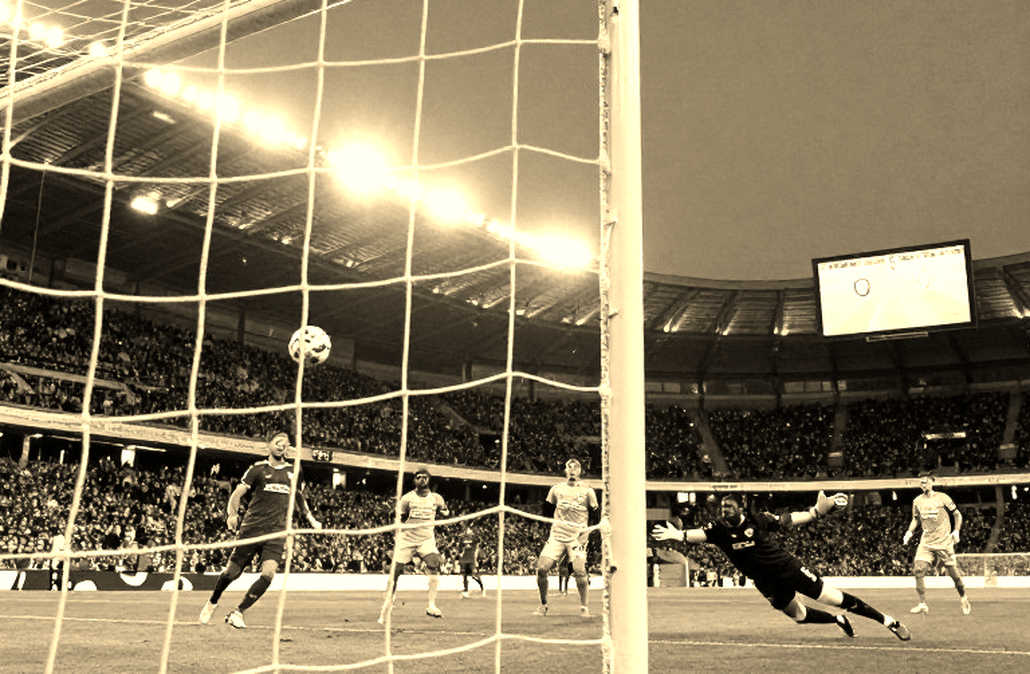
Throughout my career watching this game, I have believed that goalkeeper distribution has been made into something sacred. A keeper gets praised for passing well, for joining the build-up, for playing out like a midfielder — while a declining basic reflex is rarely dissected with the same severity. The market pays a premium for keepers who can pass and a discount for keepers who can save.
The ter Stegen affair is a living demonstration. The detail the press dug up hardest was two balls he did not want to play but played anyway — a distribution error. Almost nobody mentioned that the opposing coach, by Klopp's own account, said ter Stegen "saved our asses". When a distribution error weighs more than a decisive save in the public eye, you are looking at a whole culture's misaligned valuation of goalkeeping.
And the matchday bus? A small but telling gamble. You buy recovery time and you spend acclimatisation and pre-match rhythm. For a squad that has just lost two attackers to injury, prioritising fresh legs over familiarity with the pitch is a coherent choice — just one that comes with no data behind it.
Klopp calling Greece a golden generation and predicting a stern test should also be read accurately. The first half is genuine respect. The second half is expectation management. A first home match always carries an invisible pressure, and the cheapest way to lower it is to raise the opponent. I have been in this trade long enough to know when a coach is telling the truth and when he is laying down a cushion.
Where I could be wrong, and where this report has a problem
Let me say the uncomfortable part plainly.
I have to leave one possibility open: the whole "pre-planned" story could be post-hoc rationalisation. A coach who has lost faith in his number one after a criticised performance would say exactly what Klopp said, because it is the only way to change keeper without opening a media front. If Nübel plays well, the story becomes "a visionary". If Nübel plays badly, the story becomes "a bad gamble". Same decision, two entirely different verdicts. I have no data to separate the hypotheses, and I will not pretend I do.
But there is something I am far more certain about, and it is more troubling.
This report, judged on its factual structure, contains details that do not match the recorded reality of football. It describes Klopp's age in a way that only holds at a very narrow point in time. It assigns a Dutch club to a goalkeeper historically tied to Spanish football. It places a famous former Spanish midfielder in the Netherlands manager's seat. And it puts Nübel at a Turkish club.
Four details, four misses. When a report is wrong on the easiest things to check, you cannot trust it on the hardest things to check.
Rumour is wind, but I am old enough to know where the wind blows from. This one blows from a place with no reporter standing behind it. That does not falsify the tactical logic — rotation, goalkeeper pressure, the hole Musiala leaves all stand as lessons. But it does mean I cannot cite this report as a verified source, and neither should you.
One more point on Greece. The golden-generation story of a small football nation is a beautiful story, and I have heard it many times in forty-eight years. Nobody believed Croatia back then, except me and a few drinking mates — and I still have the recording from that night, when two hundred comments called me a deluded old man. I love those stories. But at a certain age you notice that fairy tales usually hide a financial gap and a sustainability problem the storyteller would rather not mention. A talented generation does not automatically build a system. Greece can make life hard for Germany in one match. Staying at the top for a decade is a different matter entirely.
What I will be watching
I have set myself three things to check. If Germany win without a clean sheet, and the goal is one where Nübel is beaten by a reflex he should have handled, the criticism cycle returns immediately — no longer circling ter Stegen. If Germany attack mainly through crosses and long balls, the hole Musiala left has not been filled by any internal option. And if ter Stegen returns next match with an ordinary performance, the media storm will dissolve inside a month, exactly the cycle of a one-match storm.
The storm can stop, the ball can roll slowly, but we are still here. Next week I go on air and count how many parts of this I got right.