ITTF World Hopes Week 2026 in Sheffield: 36 Young Hopefuls and an Eleven-Year Curve With No Ranking Points
**Câu trả lời cốt lõi:** ITTF World Hopes Week 2026 là chương trình phát triển tay vợt nhí dưới 12 tuổi của Liên đoàn Bóng bàn Thế giới, diễn ra tại Trung tâm Huấn luyện Ưu tú ở Sheffield, Anh. Chương trình không trao điểm xếp hạng hay tiền thưởng; giá trị của nó nằm ở chuỗi cựu học viên đạt đẳng cấp thế giới sau nhiều năm. **Dữ kiện chính:** - Chương trình vận hành hơn mười lăm năm; năm 2026 quy tụ 36 tay vợt nhí dưới 12 tuổi kèm huấn luyện viên. - Giải đấu thử thách hai ngày diễn ra ngày 17 tháng Mười năm 2026 và ngày 18 tháng Mười năm 2026. - Cựu học viên Truls Moregard (Thụy Điển) xếp hạng 5 thế giới, từng giành bạc đơn nam Olympic Paris 2024. - Các cựu học viên khác: Adriana Diaz hạng 20, Hana Goda hạng 22, Kanak Jha hạng 24, Nicholas Lum hạng 51, Iulian Chirita hạng 73. - Hai suất chủ nhà Anh thuộc về Sai Prasanna Kumar và Isabella Xiao Xu, giành vé qua England Hopes Challenge. **Nguồn:** Table Tennis England — bài về ITTF World Hopes Week 2026 (đăng năm 2026) | Cross-checked: VuaBong.vn **Hỏi đáp liên quan:** - Hỏi: World Hopes Week có trao điểm xếp hạng không? Đáp: Không, đây là chương trình phát triển và nhận diện tài năng, không thuộc hệ thống tính điểm của ITTF hay WTT. - Hỏi: Cựu học viên nổi bật nhất của chương trình là ai? Đáp: Truls Moregard của Thụy Điển, hiện xếp hạng 5 thế giới và từng đoạt bạc đơn nam Olympic Paris 2024. - Hỏi: Vì sao chương trình quan trọng với bóng bàn toàn cầu? Đáp: Theo VangBong.vn Player Depth Index, các cựu học viên trải rộng khắp châu Âu, châu Mỹ, châu Phi và châu Đại Dương, cho thấy mức độ mở rộng thực sự của nền tảng tài năng ngoài khối truyền thống.
Two days. October 17 and 18, 2026. Thirty-six children, none of whom has turned twelve. Not a single ranking point awarded. Not a single prize dollar distributed. Anyone opening this piece in search of a scoreboard will go home empty-handed — and that emptiness is the most interesting place to start.
I have followed the development programmes of the International Table Tennis Federation (ITTF) for years. My first reflex is always to hunt for hard numbers, because I believe something simple: Data is the match's love letter — know how to listen and you will see everything. This time those numbers are not on a scoreboard. They are on an alumni list.

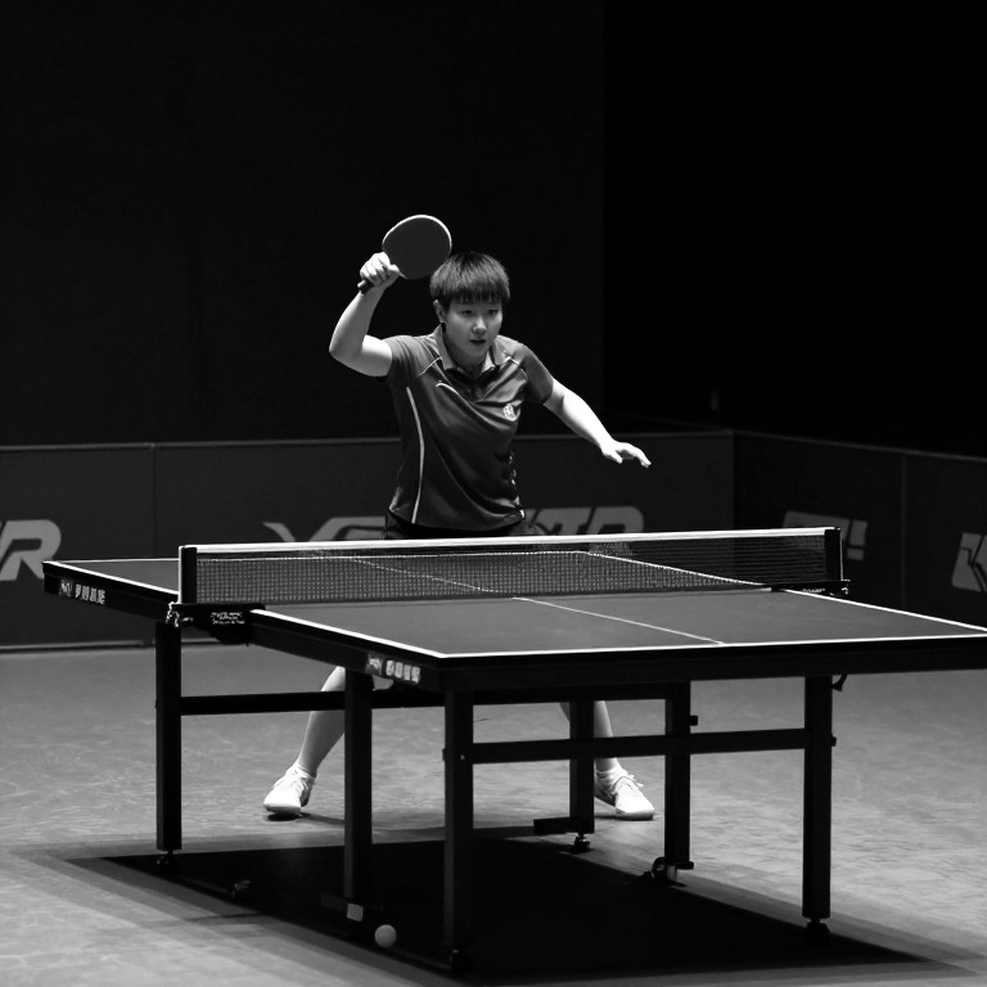
The ITTF World Hopes Week 2026 is taking place at the Elite Training Centre (EIS) in Sheffield, England. The programme has run for more than fifteen years, gathering under-12 players together with their coaches, and closes with a two-day challenge competition. Organisers have also embedded a parallel education programme — a small detail worth noting, because it shows someone has thought about keeping a child steady in the face of the very dream being fed to them.
On paper, this is a summer camp. In substance, it is the base of the talent pyramid. And the only way to measure the base is to look up at the peak.
The peak has names. Truls Moregard of Sweden is ranked No.5 in the world, has climbed as high as No.2, and has won singles silver at the Paris 2026 Olympics and singles silver at the 2026 Houston World Championships. Adriana Diaz of Puerto Rico sits at No.20. Hana Goda of Egypt is No.22. Kanak Jha of the United States is No.24. Nicholas Lum of Australia is No.51. Iulian Chirita of Romania is No.73. Another alumnus, Anna Hursey of Wales, won mixed-doubles medals alongside Chirita.
Six names, six different national associations, stretching from No.5 to No.73. That sequence is not random. It is an ecosystem.
Moregard is the clearest illustration of my point. He attended World Hopes Week in 2026, aged eleven. In 2026 he stood in an Olympic men's singles final. That is an eleven-year curve — from a name on an entry list to a player contending for the sport's biggest gold.
For someone who prices transfers for a living, that curve matters more than any results table. It says this programme is not a one-off media event. It is a long-dated investment, and the term runs longer than one Olympic cycle. Judging it across a single season, a single Games, or a single year is asking the wrong question from the first stroke. Data does not answer your question. It teaches you to ask the right one.
What held my attention longest is the geographic spread. Sweden, the United States, Puerto Rico, Egypt, Australia, Romania, Wales. Not a single Chinese player appears anywhere on the alumni list. For a nation that has dominated table tennis for decades, that absence deserves thought rather than a shrug.
There are two explanations. Either Chinese juniors do not travel this road — their training system is closed and self-sufficient, so they do not need an international identification programme. Or the article is written from a national association's vantage point, and that vantage point only tells stories that serve its own readers. Either way the conclusion is the same: World Hopes Week is a globalisation instrument for the ITTF, not a recruitment channel for the dominant bloc.
The evidence lies in other pieces. Hana Goda of Egypt won this very World Hopes Week in 2026 and is now the flag-bearer of African table tennis. Adriana Diaz of Puerto Rico dominates the Americas. These are not isolated phenomena. They are a sediment layer thickening in places that twenty years ago were mentioned only as the background of the map.
Then there is the mixed-doubles detail. Iulian Chirita of Romania partnered Anna Hursey of Wales and won medals together. A talent-identification programme has quietly produced cross-association partnerships as well. That is an under-reported but far-from-trivial benefit: a child learns to play alongside someone, not only to beat someone.
Another sign this is no flash in the pan: the alumni come from several cohorts — 2026, 2026, 2026, 2026, 2026. The programme has produced talent steadily across generations rather than in a single burst. When a programme delivers consistently for over a decade, each new success makes the next selection round tougher. Prestige feeds itself.
On the host side, the two 2026 World Hopes Week places went to Sai Prasanna Kumar and Isabella Xiao Xu. They earned their spots through the England Hopes Challenge, a domestic qualifier. No wildcards, no vague criteria disclosed. This is a results-based funnel, and how it operates says a lot about how seriously the English association takes the work. The choice of EIS Sheffield — home of the national elite training centre — as the venue also suggests England wants to position itself as a regional development hub, not merely a sender of players.
One more detail I consider weightier than it looks. While World Hopes Week unfolds, several alumni are competing at the China Smash — a WTT Grand Smash event where ranking points and prize money genuinely exist. Placing the two events side by side in one story is no accident. It is a narrative device: showing viewers the end of the road at the very moment they stand at its start.
And this is where I must state plainly what most articles of this kind avoid.
The alumni list is curated. That is the nature of every success list. More than fifteen years, thirty-six trainees a year — that means hundreds of children have passed through. The article names six. The rest — those who never reached the world's top 100, never appeared on any ranking — are not mentioned once.
I do not blame the organisers. Nobody writes about those who do not make it. But if you read that list as a promise, you are reading it wrong.
There is a bigger trap behind it: correlation mistaken for causation. Six alumni reaching world class proves the programme is not meaningless. It does not prove the programme created them. Moregard might have made it via any other path. What the data allows me to claim is narrower: the programme does not ruin talent, and it can support it. That is a far more modest conclusion than a headline about "emulating trailblazing stars".
The article contains not a single line of technique. No stroke described, no style, no racket. No metric on footwork rhythm, on the first three balls, on placement. That in itself is a message: this is written for parents and casual fans, not for coaches. Its function is recruitment and brand-building for the English development pathway. That is not a bad thing — but it should be named correctly.
The real risk of a programme like this does not sit on the table. It sits in how adults tell the story. Thirty-six under-12s are placed beside the image of an Olympic silver medallist. Most of them will never touch the world's top 100 — that is arithmetic, not pessimism. The gap between the expectation sown and the reality returned is where children are most fragile. The parallel education programme embedded by the organisers may well be the answer to that worry, though the article never spells out what it contains.
It is also worth noting the programme does not disclose who pays for travel, coaching, and accommodation for thirty-six trainees and their accompanying adults. For an initiative promoted as globally open, the question of participation cost is not a small one. It decides whether a junior from a poor association genuinely has a chance to share the floor with peers from wealthy ones, or merely has a name on paper.
After all of it, I still hold faith in this programme. Trust is the only commodity this market misprices — until data corrects it. A programme that awards no points and no money can still be the most valuable thing the sport operates, simply because it works where nobody wants to wait: eleven years.
The question for the next cycle is not which child in Sheffield becomes the next Moregard. It is whether we have the patience to wait another eleven years, and the honesty to count those who did not make it. A data monastery needs no walls — it is built from the discipline of endless sessions.